How much protein do you really need each day?
The official minimum is lower than the amount many active and older adults may need. See practical ranges and how to spread intake out.
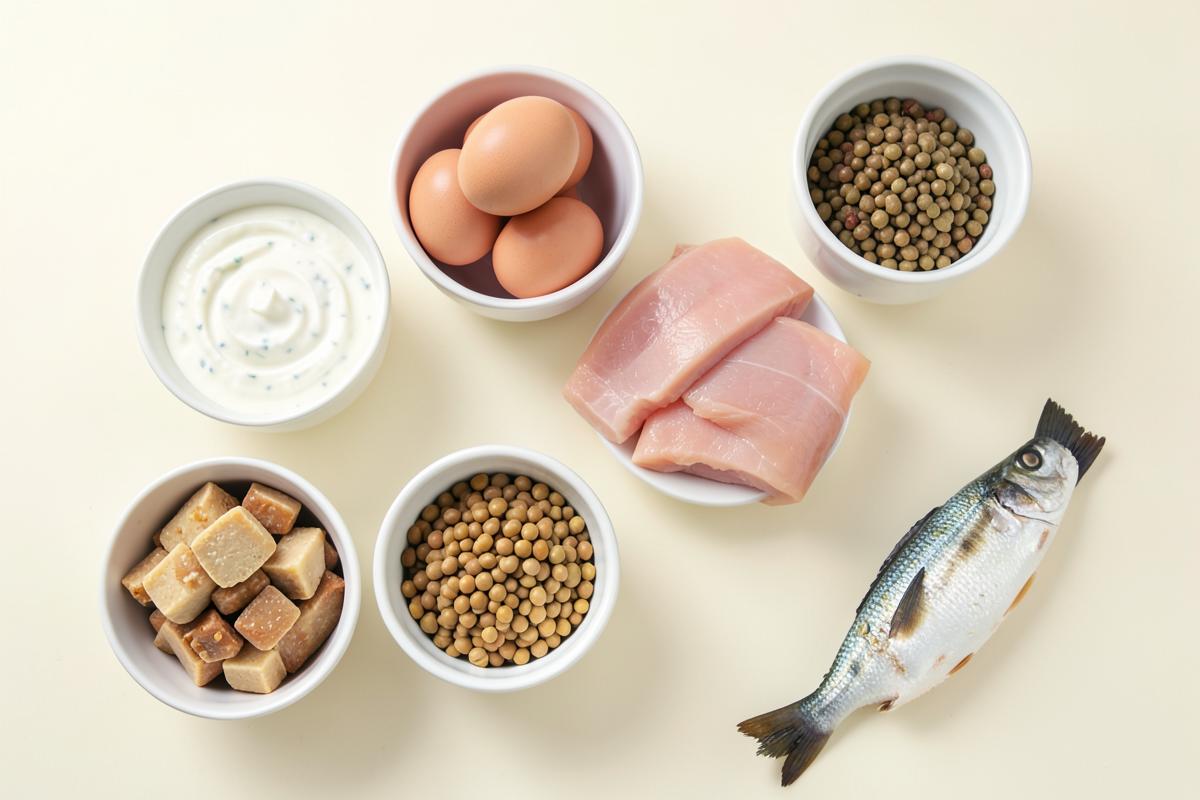
The familiar recommendation of 0.8 grams per kilogram is a minimum designed to prevent deficiency—not necessarily the amount that best supports body composition, fullness, or muscle retention.
Practical ranges
- Healthy, sedentary adult: 1.0 to 1.2 g/kg.
- Active or strength training: 1.4 to 1.8 g/kg.
- During a calorie deficit: up to 2.0 g/kg may help preserve lean mass.
- Over age 60: often 1.2 to 1.5 g/kg, with clinical guidance as needed.
Distribution matters
Spreading 25 to 35 grams across three or four meals is generally more useful than concentrating most protein at dinner.
Approximate protein per serving
- 5 ounces chicken: about 33 grams.
- 2 eggs: about 12 grams.
- 1 cup cooked lentils: about 18 grams.
- 6 ounces Greek yogurt: about 15 grams.
- 3.5 ounces firm tofu: about 15 grams.
Do plant sources work?
Yes. Use a variety and consider a slightly higher total intake because digestibility and amino-acid profiles vary.
Notice: this content is educational and does not replace personalized advice from a doctor, registered dietitian, or fitness professional.
Keep reading
Does intermittent fasting work? What the science says in 2026
The 16:8 schedule is popular, but comparative studies tell a simpler story: results come mainly from calorie balance, not the clock.
Dr. Helena Marques · September 5, 2026

GLP-1 weight-loss medications: what they do—and what they don't
Semaglutide and tirzepatide changed obesity care. Understand their effects, side effects, and why strength training matters.
Dr. Helena Marques · September 3, 2026
Ultra-processed foods: why they matter beyond calories
It is not only about calories. Texture, energy density, and eating speed can change how much you consume without noticing.
Camila Ferraz · August 24, 2026