Strength training for women: a myth-free guide
Lifting challenging weights does not make women “too bulky.” It supports bones, body composition, confidence, and metabolic health.
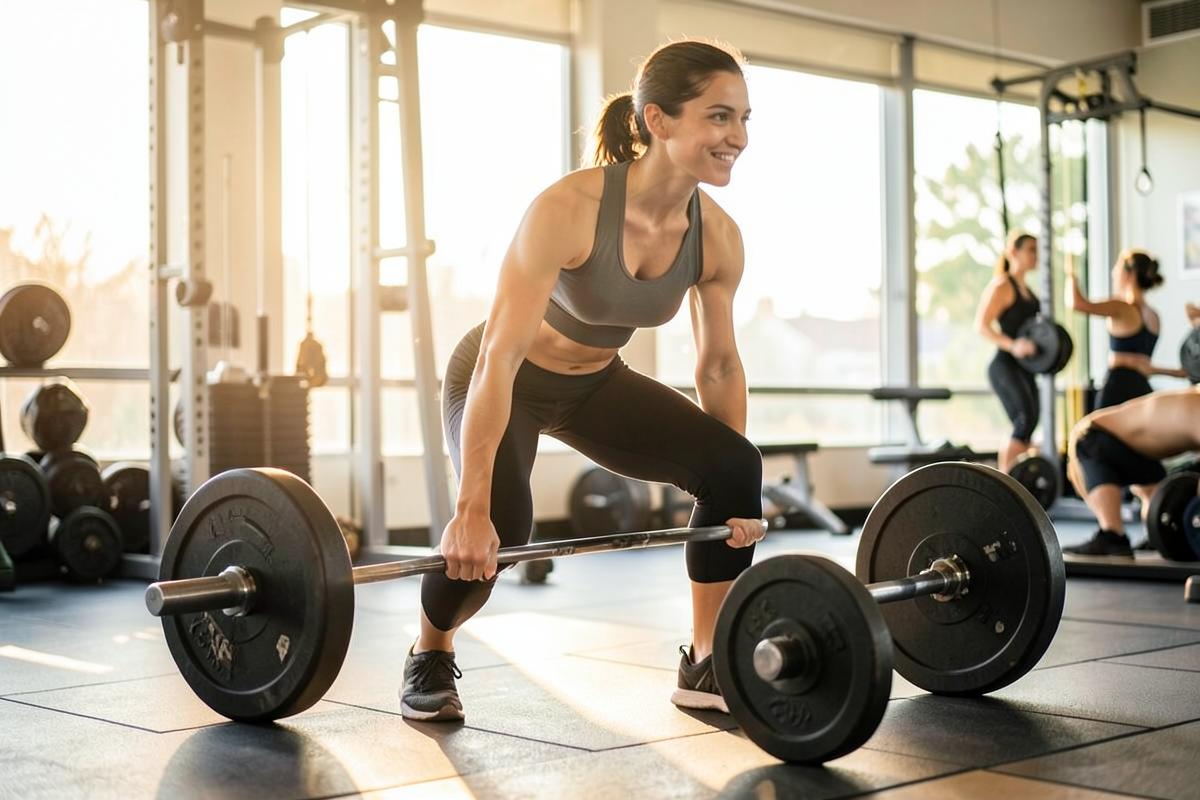
The fear of becoming “too muscular” has held back women's health for decades. Significant muscle gain is gradual, and most women notice greater strength, firmness, and better posture.
Benefits beyond appearance
- Bone density: mechanical loading helps protect against osteoporosis.
- Metabolic health: more muscle supports blood-sugar control.
- Fall and fracture prevention later in life.
- Independence in everyday tasks.
How to train
The principles are universal: progressive overload, balanced movement patterns, and workout tracking. Sets of 6 to 12 repetitions near technical failure can work very well.
The menstrual cycle
Evidence does not support rigid cycle-based programming for most women. Autoregulation is often more practical: on low-energy days, reduce volume while preserving technique and consistency.
Common mistakes
- Using only very light loads.
- Training only glutes while ignoring the upper body.
- Eating too little protein to support strength gains.
Notice: this content is educational and does not replace personalized advice from a doctor, registered dietitian, or fitness professional.
Keep reading
Creatine: the most studied—and misunderstood—supplement
Affordable, safe, and backed by hundreds of studies. Learn about dosage, timing, loading, and benefits beyond muscle.
Rafael Nunes, fitness professional · August 27, 2026

VO₂ max: the longevity marker most people never track
Cardiorespiratory fitness predicts health outcomes better than many routine measures. Learn how to estimate and improve it.
Rafael Nunes, fitness professional · August 14, 2026
Strength training for beginners: a 12-week plan that works
Strength is not just about appearance—it supports longevity. Follow a progressive three-day plan built around the movements that deliver the most value.
Rafael Nunes, fitness professional · August 8, 2026